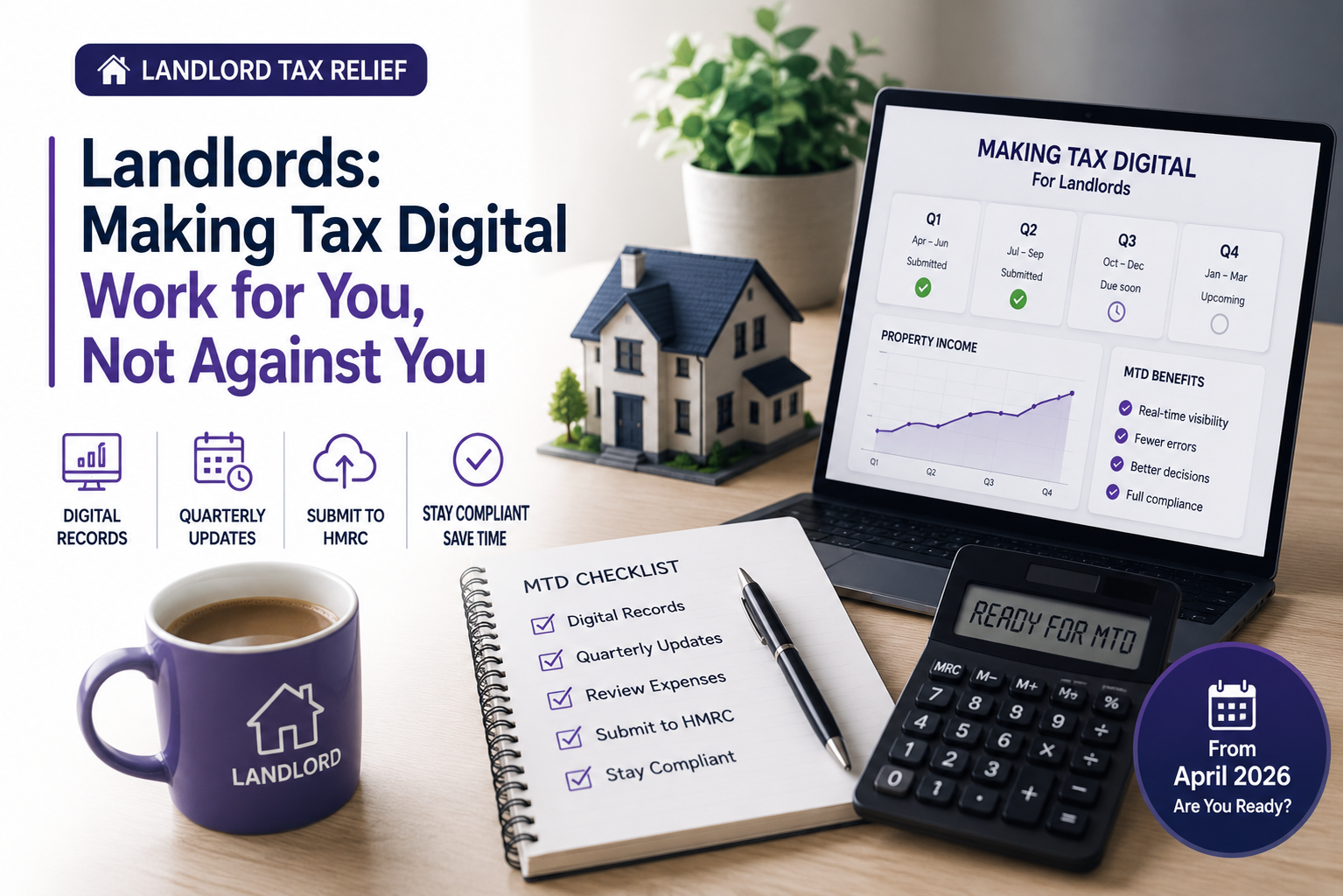
From April 2026, landlords like you will need to keep digital records and submit quarterly updates to HMRC under Making Tax Digital (MTD). The shift means spreadsheets and year-end submissions will no longer be enough for you - and for many, this change will redefine how property income is managed and reported.
For tax planning, get in touch with us now.
How to Save Money?
Change doesn't have to mean cost. In fact, landlords who prepare early can save time, money, and stress by transitioning ahead of schedule.
Take Priya, for example - she owns two rental flats in London earning £58,000 annually. Rather than wait for the 2026 deadline, she:
Moved to GetCoconut, which integrates with her letting agent's statements.
Began scanning maintenance invoices and linking them automatically to rent payments.
Set reminders every quarter to review and submit updates.
By the time MTD became mandatory, Priya had already built a smooth, digital process - while others were scrambling to meet the first HMRC deadline.
Early preparation spreads the learning curve and prevents costly errors. Waiting until 2026, by contrast, could mean missing deadlines, losing receipts, or paying last-minute accountant surcharges.
What's the Problem?
MTD aims to modernise the UK tax system, but for landlords it introduces new complexity.
From the 6th of April 2026, any landlord with over £50,000 in gross property income (from UK or overseas property) must:
Maintain digital records of all transactions.
Submit four quarterly updates each year through MTD-compatible software.
File a Final Declaration at year-end to confirm annual figures.
If you are earning between £30,000-£50,000 you will join a year later, in April 2027, while the threshold below £30,000 remains under review.
Crucially, if you have both UK and overseas property, you'll be required to report each as a separate "property business" - meaning double the reporting obligations.
What This Means For You
For you, the challenge lies not in paying more tax, but in how that tax is reported. Under MTD, every rent payment, repair, or insurance renewal must be digitally logged and submitted quarterly - even if there's no activity in a particular period.
Key Impacts for Landlords:
More frequent admin: Four quarterly updates plus a year-end statement - potentially eight if you own both UK and overseas property.
Joint ownership complexity: Each co-owner must report their own share of rental income and expenses. Expenses can be deferred to the year-end submission, but this adds bookkeeping pressure.
Software dependency: Paper records and Excel will no longer qualify. Most landlords will need to adopt subscription-based software.
Digital literacy and access: Older or rural landlords may find the switch challenging, though HMRC offers limited digital-exclusion exemptions.
Accountant workload: With quarterly deadlines, accountants will need to review figures more frequently - likely increasing ongoing fees.
Imagine managing five properties, each with different tenancy cycles, repairs, and service charges - all of which must now flow through a digital audit trail. MTD turns property ownership into year-round bookkeeping unless planned for early.
Our Solution
At Optimyze Finance, we make MTD simple.
Our recommended software, GetCoconut, is HMRC-approved and purpose-built for property owners. It automatically tracks rent, categorises expenses, and prepares quarterly submissions - no complex accounting setup required.
When combined with Optimyze's in-house methods, you'll streamline reporting, lower compliance costs, and stay ahead of every HMRC deadline.
Make the transition effortless - speak to Optimyze today and let us help you get MTD-ready the smart way.
Final Thoughts
For landlords, Making Tax Digital isn't just about compliance - it's about adopting a more efficient, transparent way to manage property income.
Yes, there's more admin and some software costs. But digital record-keeping offers better control, faster access to financial data, and fewer end-of-year surprises.
By taking action now - not in 2026 - you'll be ahead of the curve, spreading costs and minimising disruption.
The future of landlord taxation is digital. The question is: will you be ready?
For clear, practical financial guidance, get in touch with us. For GetCoconut, we can point you in the right direction too.