If you've noticed that your tax code has recently changed, you may be wondering what it means for your pay and whether you'll end up paying more tax.
Tax codes can feel like a mystery - just a string of numbers and letters printed on your payslip - but they have a very real impact on how much money lands in your bank account each month.
Understanding why your tax code has changed can help you avoid unexpected bills and, in some cases, even save money.
Every year, HMRC issues around 30 million PAYE tax codes to employees and pensioners across the UK, and more than 2 million of these are corrected mid-year due to errors or updated information.
Here's a Solution to Save Money
The good news is that a tax code change doesn't always mean bad news. In fact, if you take the time to understand your code and check it against your personal circumstances, you might discover that you've been paying too much tax. By contacting HMRC, correcting errors, or claiming eligible allowances, you could secure a refund that boosts your take-home pay.
HMRC reports that over £300 million in uniform and work-related expense claims are refunded each year, with the average claim worth around £125 per employee.
Checking your code regularly is one of the simplest ways to ensure you're not giving away more of your hard-earned money than necessary.
If you log in to your HMRC account, you can see exactly how your tax code has been calculated. If you've overpaid tax because of earlier estimates, you may even receive a rebate. HMRC processed 4.2 million self-assessment and PAYE refunds in 2023 alone, showing just how common overpayments are.
What's the Problem?
The problem lies in the complexity of the UK tax system. HMRC uses tax codes to tell employers how much income tax to deduct from your salary through PAYE (Pay As You Earn).
Each code is based on assumptions about your personal allowance, your employment situation, and any adjustments for benefits, deductions, or previous underpayments.
Tax codes are not static - in fact, more than 40% of taxpayers experience at least one code change during the year. You might move jobs, take on a second source of income, or start receiving benefits such as a company car or medical insurance. HMRC may also change your code if you've underpaid or overpaid tax in previous years.
Implications That Bring It to Life
To see why this matters, let's explore a few real-world implications of a changing tax code.
1. Reduced Take-Home Pay
Imagine you've been assigned a tax code that deducts more tax because HMRC believes you have additional income elsewhere. Overnight, your take-home pay drops by £100 each month. If the assumption is wrong, you could end up out of pocket for months until the mistake is corrected. With average UK household disposable income at just £32,300 in 2023, that shortfall quickly adds up.
2. Unexpected Tax Bills
Sometimes a new tax code is issued to recover underpaid tax from a previous year. HMRC collected over £1.3 billion through PAYE tax code adjustments in 2022/23. Unless you're prepared, this can feel like receiving an unexpected bill.
3. Missed Allowances and Reliefs
A tax code should reflect your entitlement to the personal allowance (currently £12,570 for most people). If you're entitled to additional allowances, such as the Marriage Allowance, but they're not factored into your code, you'll be paying more tax than necessary. Over 2.1 million couples currently benefit from Marriage Allowance transfers.
4. Second Jobs and Multiple Incomes
If you take on a second job or freelance work, HMRC adjusts your tax code because you only get one personal allowance. With 1.2 million people in the UK working multiple jobs in 2024, this is a common source of error.
5. Psychological Impact
Beyond finances, a sudden tax code change can feel intimidating. A recent YouGov survey found that 58% of UK taxpayers don't fully understand their tax code, and many assume HMRC must be correct. This anxiety can leave errors unchallenged, costing employees money.
Possible Solutions
The key to handling tax code changes is to be proactive rather than reactive. Here are some practical steps employees can take:
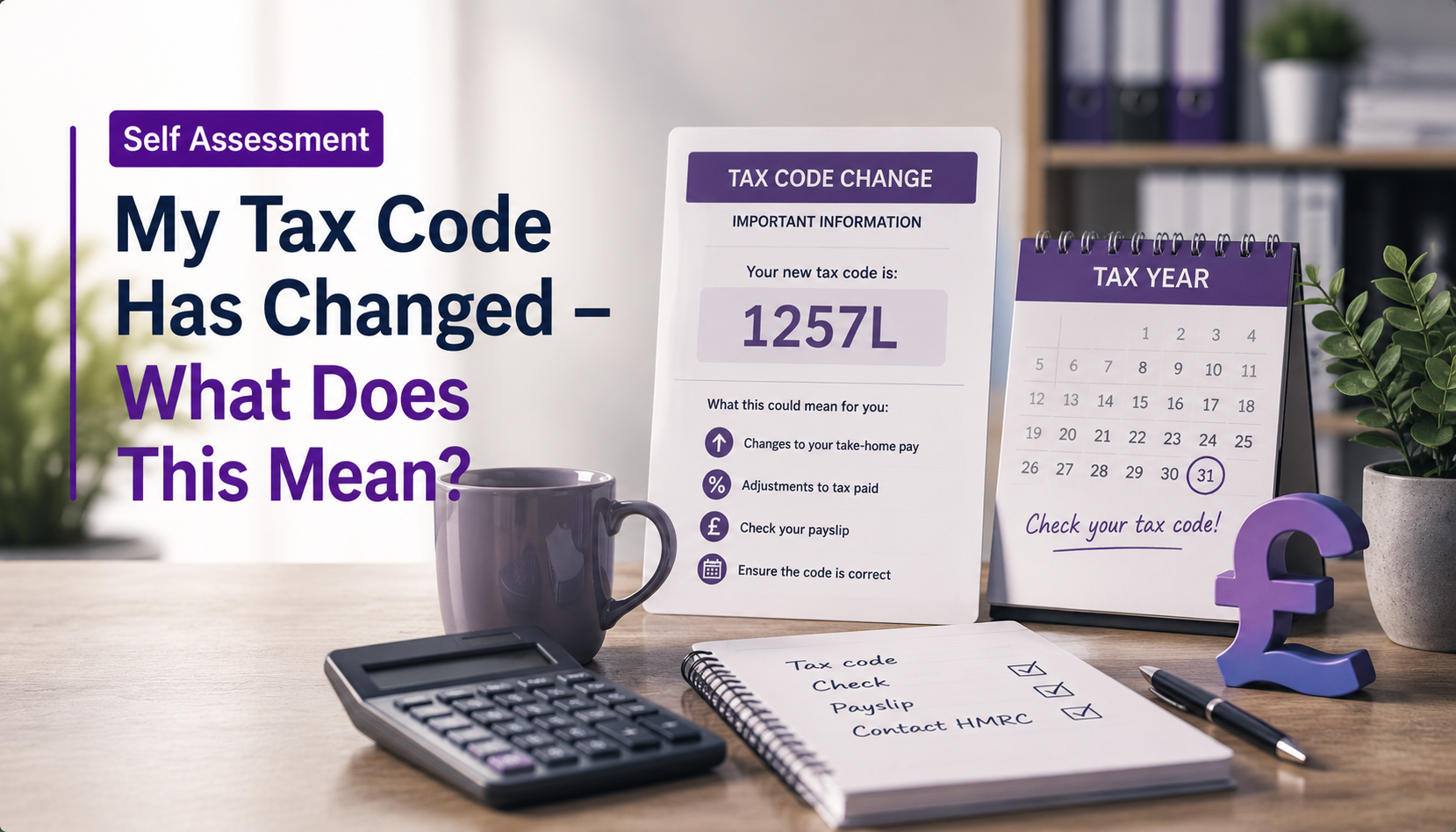
Check Your Payslip: always compare new codes with old ones.
Understand Common Tax Codes: e.g., 1257L for most employees, BR for second jobs, D0/D1 for higher rates, and K codes for deductions.
Contact HMRC: use your online account or call directly to correct mistakes.
Claim Eligible Reliefs: Marriage Allowance, work-related expenses, or home-working relief can be worth up to £1,260 per year.
Plan Ahead for Adjustments: HMRC spreads repayments of underpaid tax across the year, but budgeting helps soften the impact.
Seek Professional Advice: accountants and advisers ensure you don't lose out unnecessarily.
What This Means for You
A change in your tax code isn't something to panic about, but it does deserve your attention. Your tax code is HMRC's instruction to your employer on how much tax to deduct, and errors can cost you money. By understanding what your code means, checking it regularly, and taking action when something seems off, you can avoid unexpected surprises and even save money.
In short, treat a tax code change as an opportunity. It's a reminder to review your financial situation, check for missed allowances, and ensure you're paying the right amount of tax - not too much, and not too little. A few minutes of checking today could save you hundreds tomorrow.
Want a thorough examination of your taxes to save yourself more money? Reach out to our trusted experts now for any help or inquiries you may have.