If you've entered the top 4% of UK earners with an income of £100,000 or more, congratulations - this milestone reflects years of dedication, long hours, and disciplined financial management.
However, you and many other higher earners in the UK might find yourself surprised when your tax-free personal allowance - the amount of income you can earn before paying Income Tax - shrinks or even disappears entirely. In fact, it may already be affecting you.
Understanding why this happens - and taking action now - is critical to avoid losing far more of your income than necessary.
HMRC data shows that around 1 million people in the UK lose some or all of their personal allowance each year because their income exceeds £100,000.
Here's Why It Matters
Before diving into the mechanics of why your allowance is reduced, let's start with the good news: there are practical ways to minimise the impact.
Contributing more into your pension, making charitable donations under Gift Aid, or using salary sacrifice arrangements can help reduce your "adjusted net income" - potentially restoring all or part of your allowance.
Research by the Institute for Fiscal Studies found that taxpayers earning between £100,000 and £125,000 face one of the steepest effective marginal tax rates in Europe. Using the right strategies can mean saving up to £5,028 in tax per year - the value of the lost allowance at the 40% rate - while also strengthening your financial future.
What's the Problem?
Personal allowance is a fundamental part of the UK tax system. For the 2025/26 tax year, it remains set at £12,570, a figure frozen since 2021.
Normally, this allowance is available to everyone, regardless of income, and it shelters a portion of earnings from Income Tax.
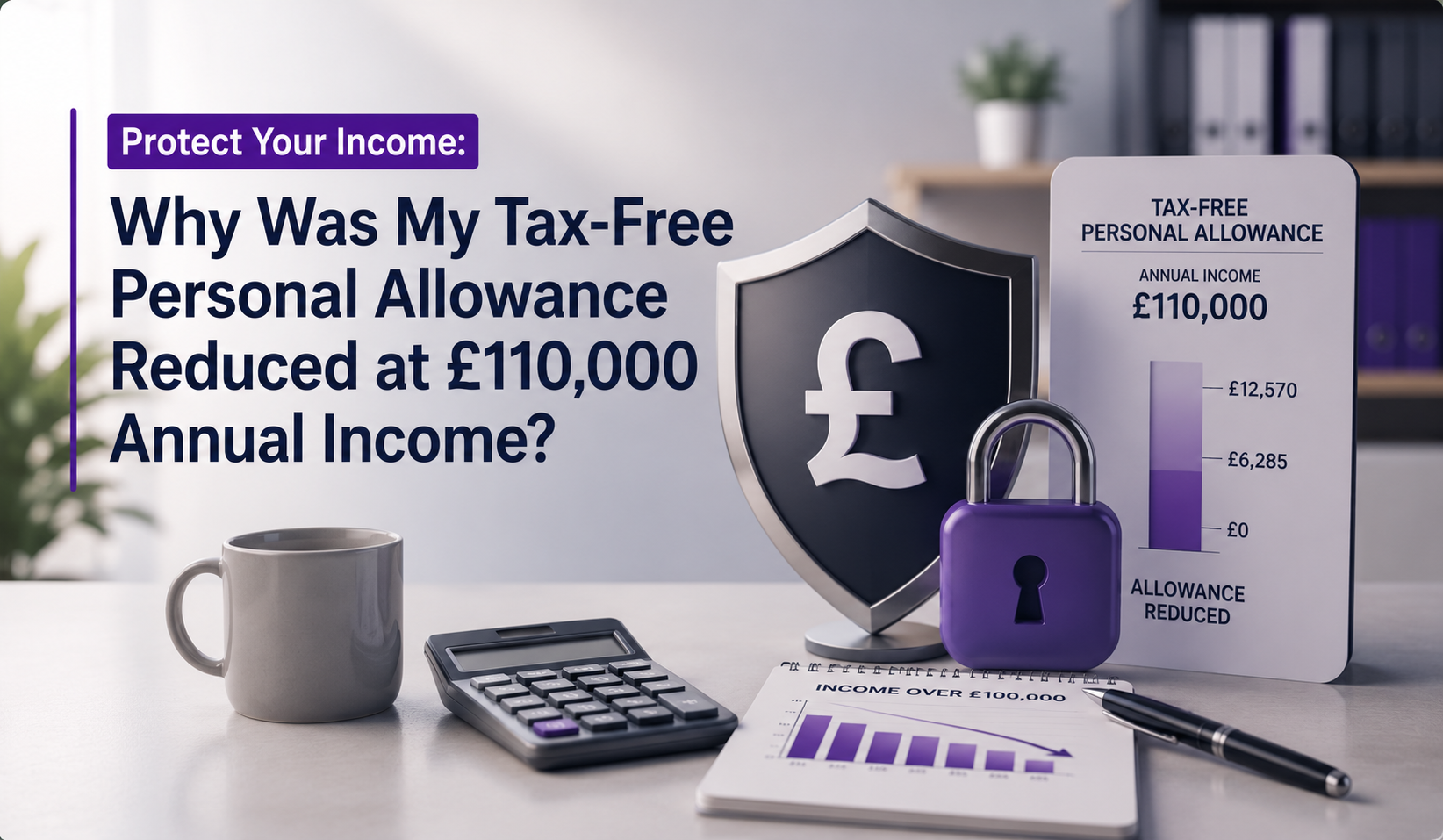
However, the rules change once your income exceeds £100,000. At this threshold, the government begins phasing out the personal allowance. For every £2 you earn over £100,000, you lose £1 of your tax-free allowance. By the time your income reaches £125,140, your personal allowance is reduced to zero.
So, if you're earning £110,000, you're £10,000 above the threshold. That means you've lost £5,000 of your allowance, leaving you with only £7,570 tax-free income rather than the full £12,570.
The Hidden Tax Trap
This tapering creates a hidden tax trap that many employees do not initially appreciate. The phase-out mechanism effectively increases your marginal tax rate in this income band.
Standard higher-rate band: income above £50,270 and up to £125,140 is normally taxed at 40%
Allowance taper: because your allowance reduces at the same time, you're effectively taxed twice - first at 40% on the income itself, and second by losing the tax-free portion
Between £100,000 and £125,140, each additional £1 of income not only attracts 40% Income Tax but also reduces your allowance - meaning you pay 60p in tax for every £1 earned. This is often referred to as the "60% tax trap."
For example, someone earning £110,000 pays an additional £4,000 in tax compared to someone on £100,000, despite only earning £10,000 more. That's a marginal rate of 60%, significantly higher than the headline 40% higher-rate band.
The Resolution Foundation notes that this hidden band is so punitive that fewer than 15% of higher earners are even aware of their true marginal rate.
Possible Solutions
While the system itself can feel punitive, there are several practical strategies you can employ to reduce your taxable income and keep more of your hard-earned money.
1. Pension Contributions
Contributing more into your pension is one of the most effective strategies. Payments reduce your adjusted net income. For example, if you earn £110,000 and contribute £10,000 into your pension, your adjusted net income falls back to £100,000. This restores your full allowance and reduces your effective tax rate.
Figures from HMRC show that over 60% of higher earners making pension contributions use them specifically to avoid the loss of personal allowance.
2. Gift Aid Donations
Charitable donations under Gift Aid also reduce your adjusted net income. Donating £5,000 could restore £2,500 of your personal allowance.
According to the Charity Commission, higher-rate taxpayers donated £5.4 billion under Gift Aid in 2023 alone, showing how widespread and effective this tool can be.
3. Salary Sacrifice Arrangements
Salary sacrifice agreements - such as exchanging salary for extra pension contributions or electric car leasing - are highly effective. With over 600,000 employees in the UK now enrolled in workplace electric car salary sacrifice schemes, this method has grown rapidly as a dual tax-saving and sustainability tool.
4. Timing Bonuses and Income
Deferring a bonus into a future tax year can make a tangible difference, especially if you expect income to drop. Even shifting income by one year could save thousands by restoring all or part of your allowance.
5. Spousal Transfers and Allowances
Transferring savings or investments to a lower-earning spouse won't restore your own allowance but can reduce overall household tax. According to HMRC, around 2 million couples in the UK currently benefit from some form of spousal tax planning.
What This Means for You
The reduction of the personal allowance for those earning over £100,000 creates one of the UK's most costly tax traps. For employees earning £110,000 annually, this means losing almost half of their allowance and paying disproportionately high tax on additional income.
But there are legitimate ways to mitigate this impact. Pension contributions, Gift Aid, salary sacrifice, and careful planning can reduce your adjusted net income and restore some or all of your allowance.
The lost allowance is worth up to £5,028 a year - so failing to act could mean handing this over unnecessarily. By being proactive, you not only save tax today but also build wealth and financial security for tomorrow.
If it's professional help you're seeking to fix this issue, we're happy to talk it through.